The first 100 years
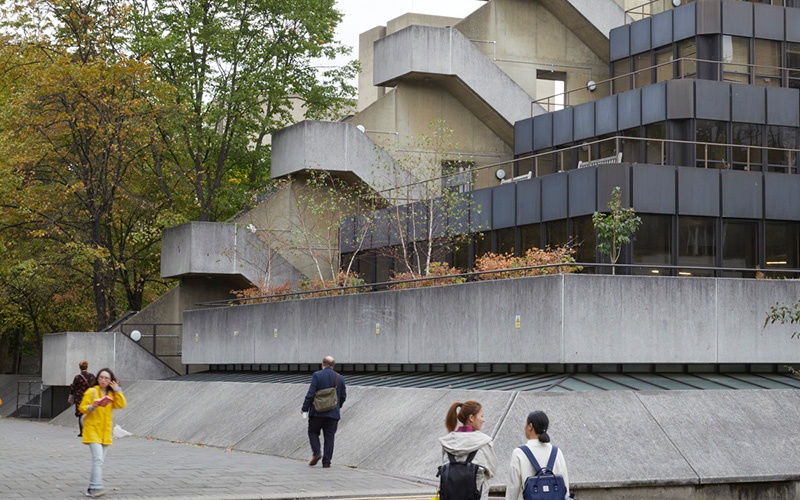
The photograph shows the Institute's Bedford Way building in the 1970s, also used on the book's cover.
Richard Aldrich
Professor Aldrich is author of the book, 'The Institute of Education 1902-2002: A centenary history' ISBN: 0854736352, IOE Publications more
History
The Institute of Education is known throughout he world as the UK's premier institution for the education and training of teachers and for the conduct of educational research. That reputation has been gained and sustained over a period of 100 years. During those years, however, the Institute has experienced at least four different identities. Founded in October 1902 as the London Day Training College (LDTC) under the joint auspices of the University of London and of the London County Council, in 1932 it became the University's largest central activity as the Institute of Education. From 1949 it acquired a dual role at the centre of a wider Institute of some 30 associated colleges and departments of education. During this period it was responsible for the education and training of one in four new teachers in England and Wales. Following the demise of the Area Training Organizations (ATOs) in the 1970s, the Institute reverted to its previous role. In 1987 the award of a royal charter set the seal upon its status as an independent college and school of the University of London.
Over the last one hundred years the Institute has seen a gradual broadening of responsibilities. Founded originally to provide teachers for the elementary and secondary schools of London, transference to the University in 1932 reflected its rapidly developing national and international contributions. In the second half of the twentieth century the reputation for producing good teachers was complemented by its development as an unrivalled centre of educational research.
Broadening of responsibilities has been accompanied by expansion in terms of numbers. The original 58 students of 1902 have grown to some 4,400 today. Such expansion has necessitated frequent changes of location. For the first year the London Day Training College was housed at the London School of Economics, as a result of the generosity of Sidney Webb, principal founder of both institutions. This was followed by four years of peripatetic existence, but from 1907 it acquired its own building in Southampton Row, currently occupied by the Central Saint Martins College of Art and Design. In 1938 the Institute moved to the very heart of the University in the north wing of the Senate House. Evacuated to Nottingham during the Second World War, post-war expansion led to further pressure upon space. In 1977 the current Bedford Way building was formally opened. Unfortunately only one of the five wings of the original Lasdun design was ever completed, so that some departments, including the library, remained dispersed. The magnificent Newsam Library was added in 1992.
The Institute's record of achievement has been based upon the calibre and commitment of its staff and students. It has been particularly fortunate in its ten Principals and Directors. The names of Sir John Adams, Sir Percy Nunn, Sir Fred Clarke and Dr G.B. Jeffery have justifiably passed into educational history. Adams bore the reputation of 'the greatest teacher in London'; Nunn was the author of the highly influential, Education, Its Data and First Principles, first published in 1920, which went through four editions and 20 reprints. Fred Clarke was the inspirational educationist of the Second World War and immediate post-war years; Jeffery the creator and promoter of the wider Institute of the ATO. Six of their successors are still active and have contributed to the centenary celebrations: Professor Lionel Elvin, Sir William Taylor, Professor Denis Lawton, Sir Peter Newsam and Professor Peter Mortimore – together with the current Director, Professor Geoff Whitty.
Other influential and (sometimes controversial) figures from the early years included one of the LDTC's founders, Sophie Bryant. Headmistress of the North London Collegiate School, and member of the Senate of the University of London, Bryant made her school available for teaching practice, encouraged her pupils to train as teachers at the LDTC and herself chaired the LDTC's first governing body. Personalities of the inter-war years included Cyril Burt, the advocate of mental measurement, and Marion Richardson, pioneering art teacher who encouraged children to draw and paint from memory and explored the relationship between art and handwriting. In the 1930s Susan Isaacs founded the prestigious Department of Child Development, where she revolutionized approaches towards the social and intellectual education of young children, while supplementing her meagre Institute salary by writing a column in Nursery World magazine under the pseudonym, Ursula Wise. The most controversial figure of this period, however, was Reinhold Schairer, a member of staff 1937-40, accused in a recent book by Michael White of being a German spy with high-level contacts in the Nazi party. After the war the Institute's burgeoning international role was reflected in the appointment of Joseph Lauwerys to a chair of comparative education in 1947. Lauwerys played a key role in the foundation of Unesco and continued Clarke's work in the international promotion of educational reconstruction. The Institute's leadership in the disciplines of education was subsequently confirmed by such scholars as Philip Vernon in psychology, Richard Peters in philosophy and Basil Bernstein in sociology.
In 1902 Sidney Webb had expressed the view that the duty of the University of London, which had recently been entrusted with a teaching as well as an examining role, was 'to become the foremost post-graduate centre of the intellectual world'. During the first 100 years of its existence the Institute of Education has assumed that role in respect of education. It has fulfilled and extended its original responsibilities to the children and schools of London by supplying a steady stream of well-qualified teachers for service in the whole of the UK. Its international role developed from Empire through Commonwealth to encompass the whole world, so that today its students are drawn from some 80 countries. The publication of the centenary history in 2002 provides an opportunity for members of the Institute, and others, to appreciate the diversity and achievements of the past, and to acquire an enhanced understanding of its potential future roles.