Teaching assistants boost teachers' productivity but not pupils' progress

04 September 2009

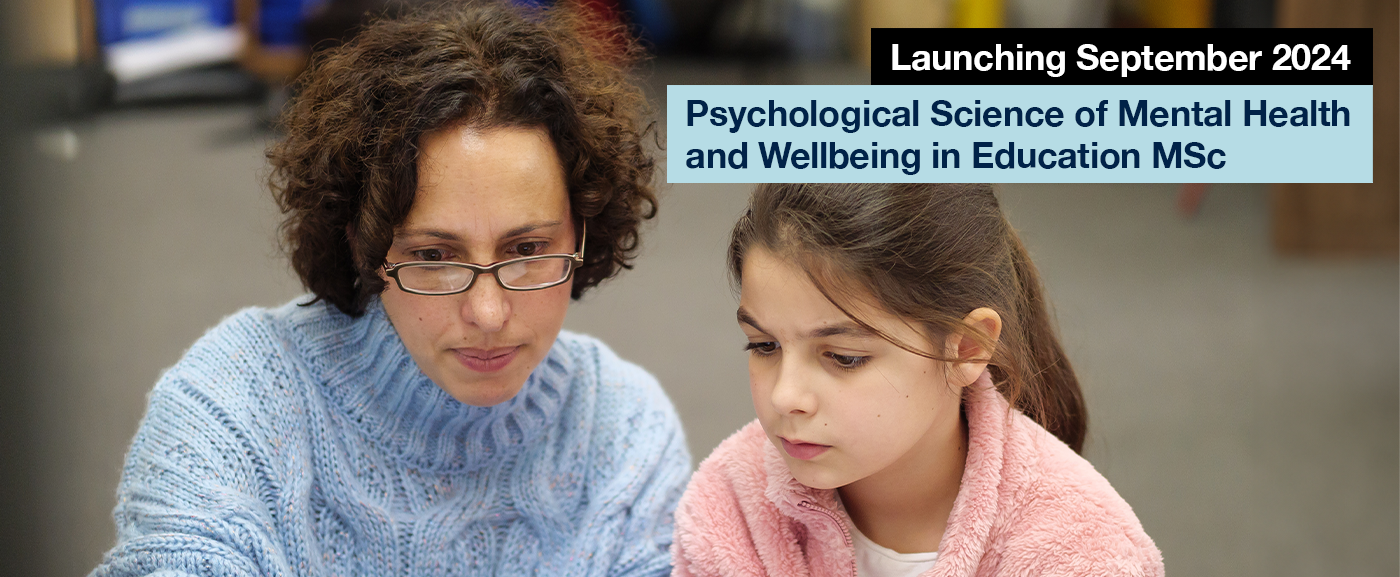
Teaching assistants reduce teachers' stress levels and improve classroom discipline but do not boost pupils' progress, according to the largest-ever study of the impact of support staff in schools.

A survey by researchers at the Institute of Education, London of 20,000 teachers and support staff in primary, secondary and special schools in England and Wales has found that support staff help teachers feel more positive about their work. The assistance they give teachers and pupils leads to reduced teacher workloads and greater job satisfaction, and most support staff are happy with their jobs.

Teaching assistants (TAs) have a positive effect on pupils, who are more on-task when working with them and more likely to receive one-to-one help, and secondary pupils are less disruptive and distractable. As a result, teachers can spend more time with the rest of the class without interruptions, finds the study, which will be presented at the British Educational Research Association conference today (September 4).

However, the study also shows that primary and secondary pupils supported by TAs make less progress on average than those of similar ability, social class and gender who do not receive such assistance. In general, the more support they receive, the fewer gains they make.

Professor Peter Blatchford, who led the team, says: "Teaching assistants have made teachers' jobs more productive and provided invaluable personal contact for struggling pupils. Unfortunately, though, we found no evidence that their support has helped pupils make better progress in English, maths and science in any of the seven year groups we surveyed."  

The researchers compared the impact of different amounts of support from TAs on pupils' progress in these subjects in 2005–06 and again in 2007–08. They examined test results from more than 8,000 pupils in 153 primary and secondary schools in England and Wales, interviewed teaching staff and observed classes.

The team classified each pupil in terms of the amount of support they received from TAs over the year. In general, the more support they received, the less progress they made.

"The reasons why pupils have this support in the first place – lower achievement, learning and behaviour difficulties, social class – have all been accounted for in the analysis," says Professor Blatchford, "so we cannot say that pupil characteristics are the cause of their slower progress."

He believes instead that a main reason is that less than a quarter of teachers have been trained to manage TAs, even though more than half of teachers do so. In addition, only a quarter of the teachers the researchers surveyed – only 1 in 20 in secondary schools – had allocated planning or feedback time with TAs.

TAs are normally assigned to the pupils who require the most help – those with special educational needs or those with the lowest attainment. But the researchers found that the more time pupils spend with TAs, the less time they spend being taught by the teacher.

Professor Blatchford says: "While TAs are extremely dedicated – many work extra hours without pay –  their routine deployment to pupils most in need seems to be the heart of the problem.  Pupils with the most need can become separated from the teacher and the curriculum.

"This is not the fault of TAs. Policymakers and school staff need to rethink the way TAs are used in classrooms and prepared for the tasks that teachers give them. This will help maximise their huge potential to help teachers and pupils."

Numbers of TAs and other school support staff have grown in recent years, partly because of the increase of SEN pupils in mainstream schools. Government figures show that nearly one in four people in the school workforce is a TA.

The Deployment and Impact of Support Staff Project was funded by the Department for Children, Schools and Families and the Welsh Assembly Government. The research brief and report can be found at http://www.dcsf.gov.uk/research/programmeofresearch/index.cfm?type=5&x=47&y=12
Ends

Further information from:
David Budge
BERA press officer
(off)     0161 306 7300 (from 9am Wednesday, September 2)
(mob)  07881 415362
email: d.budge@ioe.ac.uk


Notes for editors

1. The national agreement on raising standards and tackling workload was signed by government, employers and school workforce unions on 15 January 2003. Acknowledging the pressure on schools to raise standards and tackle unacceptable levels of workload for teachers, it introduced a series of significant changes to teachers' conditions of service to be introduced in three annual phases from September 2003. This included creating new roles in schools for adults who support teachers' work and pupils' learning.

2. Provisional DCSF figures show that in January 2009, there were 338,920 full-time equivalent support staff in England, of whom 181,580 were teaching assistants. In January 2008, the figures were 322,400 and 175,600 respectively. Figures from the Welsh Assembly Government show that there were 19,094 full-time equivalent support staff in Wales in January 2009, of whom 14,119 were teaching assistants (16,946 and 11,938 respectively in January 2008).

3. The research included three biennial questionnaire surveys, which generated 20,000 responses; 1,500 detailed timelogs completed by support staff; samples (observations and teacher ratings) of more than 8,000 pupils across Years 1, 2, 3, 6, 7, 9 and 10 in 153 schools in England and Wales; case studies; and more than 50,000 observations of pupils.

4. Across the seven age groups studied there was a difference of about 1 national curriculum sublevel (there are three sublevels for each full national curriculum level) between the pupils with the most support (over 50 per cent of the time spent with a TA) and the least support. In English, the difference in progress between the least supported and most supported pupils was the equivalent of 1.5 and 2 national curriculum sublevels. In maths and science, the difference in progress between the least supported and most supported pupils was the equivalent of 1 national curriculum sublevel.

5. The research team consisted of Peter Blatchford, professor of psychology and education; Paul Bassett, statistician; and research officers Penelope Brown, Clare Martin, Anthony Russell and Rob Webster.

6. The Institute of Education is a college of the University of London, specialising in teaching, research and consultancy in education and related areas of social science and professional practice. Last year's Research Assessment Exercise judged almost two-thirds of the work submitted by the IOE was internationally significant, and 35 per cent was regarded as "world leading".